
The Complete Guide to Nissan Oil Change Information
When Does Your Nissan Need an Oil Change?
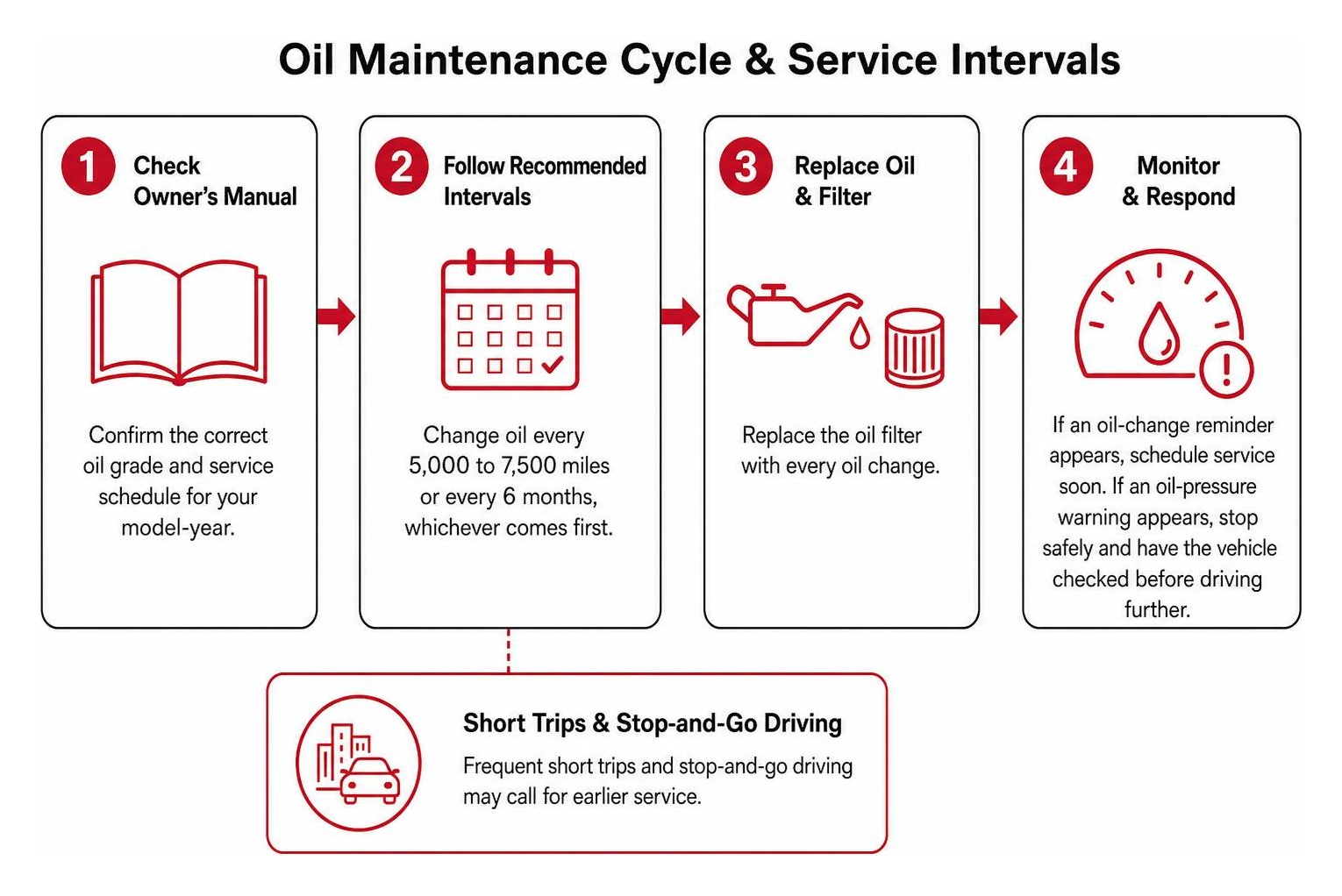
For a Nissan oil change, start with your model-year owner's manual and Nissan's maintenance schedule tool. It gives you the correct oil grade and service schedule for your engine. Many newer models have service intervals around 5,000 to 7,500 miles, but frequent short trips and stop-and-go driving may call for earlier service. Replace the oil filter with each oil change.
If an oil-change reminder appears, schedule service soon. An oil-pressure warning is different: stop safely and have the vehicle checked before driving further.
I'm Vaughn Smith, marketing director for Smith Automotive Group, which includes Nissan South Morrow. My work with Nissan dealership service teams informs this nissan oil change guide and its focus on clear, practical maintenance advice.
Disclaimer: This guide is provided for educational and informational purposes only. Vehicle maintenance, inspections, and repairs should always be completed by a certified Nissan technician. Always consult our service department and review your official vehicle owner's manual before conducting any maintenance or repairs.
Recommended Nissan Oil Change Intervals for Modern Vehicles
Maintaining clean engine oil is the most vital step in preserving the performance and longevity of your vehicle. Modern engines rely on precision engineering, tight tolerances, and advanced variable valve systems that require consistent lubrication.
Following a structured routine maintenance schedule prevents premature mechanical wear and keeps your vehicle operating smoothly during daily commutes and long highway trips alike.
Standard Mileage Intervals for Newer Models
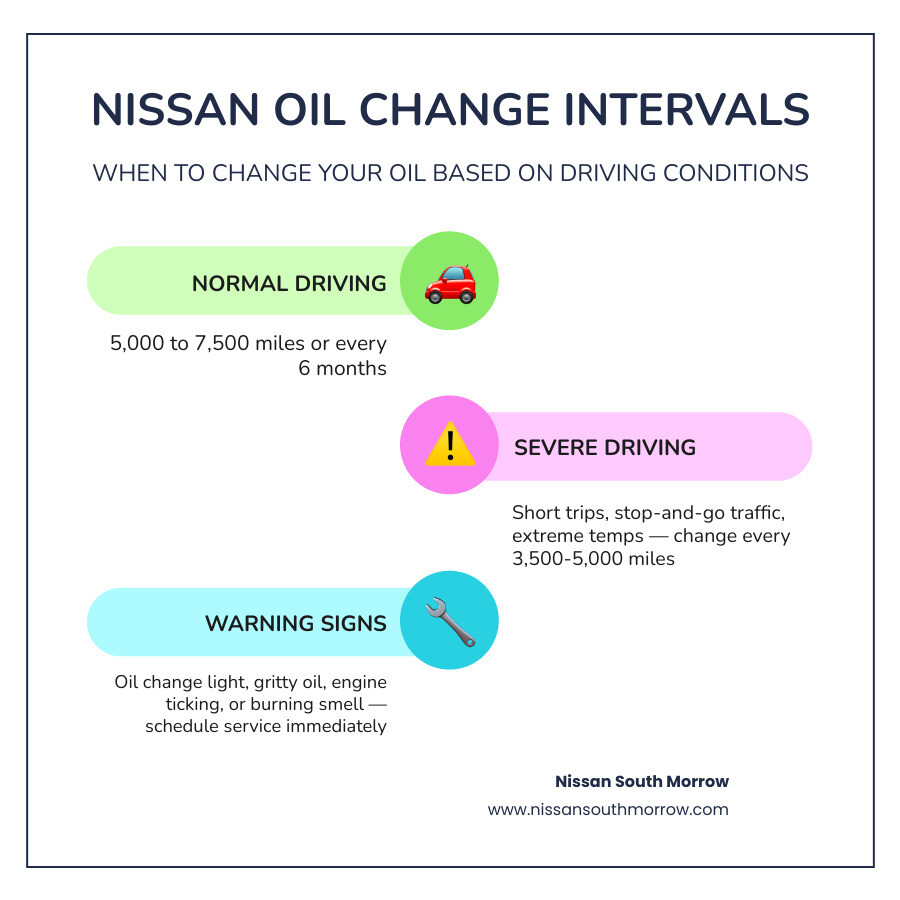
For many newer Nissan models operating under normal conditions, the recommended oil change interval is every 5,000 to 7,500 miles or every six months, whichever occurs first.
Adhering to these intervals helps preserve your factory warranty protections. Time is just as critical as mileage because motor oil degrades and oxidizes naturally over time, even if the vehicle sits parked or accumulates low mileage.
How Driving Habits and Local Climate Impact Oil Life
Driving conditions often demand an adjusted maintenance schedule. If your daily routine involves severe operating conditions, your vehicle may require service every 3,500 to 5,000 miles.
Operating conditions that accelerate oil breakdown include:
- Frequent short trips under five miles where the engine cannot reach full operating temperature
- Extended idling or extensive stop-and-go driving in congested traffic
- Operating in sustained high ambient summer temperatures
- Regular towing, hauling heavy cargo, or driving in dusty environments
In hot weather, thermal breakdown occurs faster, reducing the oil's ability to coat moving parts. In contrast, short commutes prevent engine oil from getting hot enough to evaporate condensation, leading to fuel dilution and accelerated sludge formation.
Why Full-Synthetic Oil Is Standard for Nissan Engines
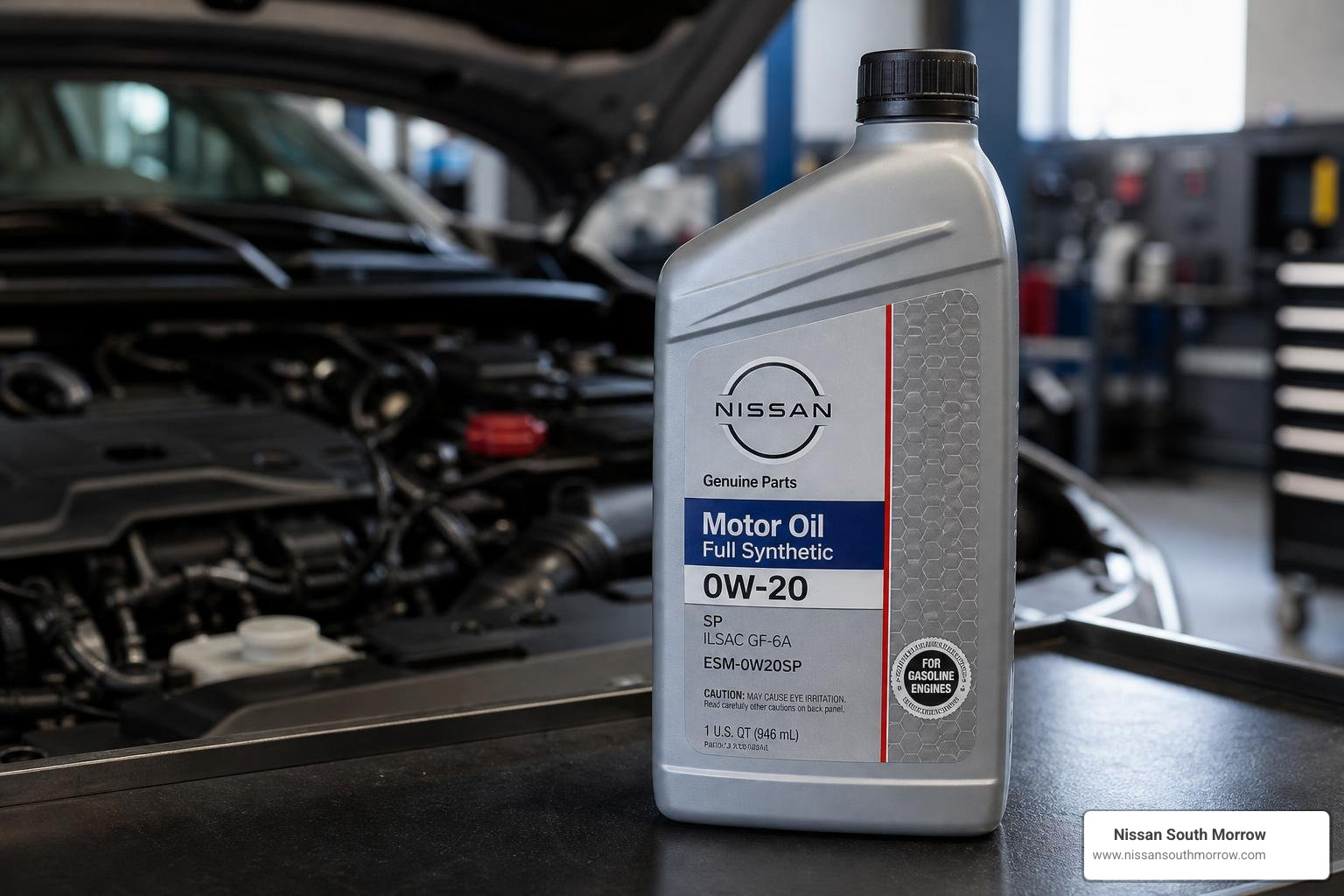
Modern Nissan vehicles leave the factory filled with advanced synthetic lubricants. Engineering designs demand higher resistance to heat and friction than conventional mineral oils can provide.
Engineering Benefits of Synthetic Formulations
Full-synthetic formulations deliver uniform molecular structures that outperform conventional oils across several metrics:
- Superior Cold-Start Protection: Synthetic oil flows immediately during startup, delivering essential lubrication to the top of the engine within seconds to minimize wear.
- Thermal and Viscosity Stability: Under extreme heat, synthetic oil resists thinning out and breaking down, maintaining a strong protective barrier between moving components.
- Turbocharger Protection: Modern downsized engines, such as Nissan's VC-Turbo powertrains, run at elevated operating temperatures. Synthetic oil cools and lubricates fast-spinning turbocharger bearings without scorching or leaving carbon deposits.
- Sludge and Deposit Prevention: Advanced detergents suspended in synthetic lubricants keep engine internals free from carbon varnish and harmful sludge buildup.
Dangers of Skipping or Delaying Scheduled Service
Neglecting regular service intervals compromises the engine from the inside out:
- Accelerated Timing Chain Wear: Degraded oil loses its lubricity, causing premature wear and stretching of delicate timing components.
- Oil Starvation: Sludge can accumulate in narrow passages and oil pick-up screens, starving critical upper valvetrain components.
- Thermal Damage and Overheating: Dirty oil cannot efficiently dissipate heat, placing added thermal stress on engine gaskets and seals.
- Costly Ownership Repercussions: Over time, unaddressed oil degradation can lead to significant engine repairs, diminishing vehicle dependability and resale value.
Oil Viscosity Grades and Model-Specific Engine Requirements
Every powertrain requires a specific viscosity grade tailored to its internal tolerances and cooling demands.
| Nissan Model | Common Engine Configuration | Recommended Synthetic Oil Grade | Standard Interval (Normal Conditions) |
|---|---|---|---|
| Nissan Rogue | 1.5L VC-Turbo 3-Cylinder | 0W-20 Full Synthetic | 5,000–7,500 Miles / 6 Months |
| Nissan Frontier | 3.8L V6 Direct Injection | 5W-30 Full Synthetic | 5,000–7,500 Miles / 6 Months |
| Nissan Sentra | 2.0L 4-Cylinder | 0W-20 Full Synthetic | 5,000–7,500 Miles / 6 Months |
| Nissan Kicks | 2.0L 4-Cylinder | 0W-20 Full Synthetic | 5,000–7,500 Miles / 6 Months |
| Nissan Pathfinder | 3.5L V6 | 5W-30 Full Synthetic | 5,000–7,500 Miles / 6 Months |
| Nissan Altima | 2.5L 4-Cylinder / 2.0L VC-Turbo | 0W-20 Full Synthetic | 5,000–7,500 Miles / 6 Months |
| Nissan Armada | 3.5L Twin-Turbo V6 | 0W-30 / 5W-30 Synthetic | 5,000–7,500 Miles / 6 Months |
Model-Specific Requirements During a Nissan Oil Change
- Nissan Rogue: Equipped with variable-compression turbocharging, the Rogue relies on low-viscosity 0W-20 synthetic oil to lubricate high-stress components while maximizing fuel efficiency.
- Nissan Frontier: Built for hauling and towing, the Frontier's 3.8L V6 relies on 5W-30 full synthetic to resist high shear forces during heavy-duty utility use.
- Nissan Sentra & Kicks: These efficient commuters benefit from 0W-20 formulations that minimize parasitic internal friction, helping deliver smooth acceleration and lower emissions.
Understanding Common Nissan Viscosity Ratings
The numbers on an oil container indicate its flow characteristics:
- 0W-20: The "0W" indicates optimal winter startup flow, while the "20" denotes its high-temperature thickness. This formulation minimizes internal engine drag.
- 5W-30: Offers slightly thicker film strength at high operating temperatures, making it suitable for larger-displacement V6 engines and heavy-load demands.
- 0W-30 / 5W-40: Formulated for specialty or performance turbo applications requiring robust shear resistance under severe thermal stress.
Why Genuine Oil Filters and Professional Service Protect Engine Life
Changing your motor oil without replacing the filter is counterproductive. As engine oil circulates, it traps carbon, dirt, and microscopic metal particles.

Selecting certified professional service ensures your vehicle receives genuine parts designed specifically for Nissan engine pressures.
The Role of Anti-Drainback Valves in OEM Filters
Genuine Nissan oil filters include an engineered anti-drainback valve. When the engine is turned off, this silicone valve prevents motor oil from draining out of the filter housing back into the oil pan.
When you restart the engine, pressurized oil is instantly available, reducing metal-on-metal contact during startup. Aftermarket filters may lack these precise pressure tolerances or use lower-grade filtration media prone to early saturation.
What Is Included in a Comprehensive Dealership Visit
When you bring your vehicle in for maintenance, our certified technicians provide complete care that goes beyond draining fluids:
- Draining old fluid and refilling with Genuine Nissan full-synthetic motor oil
- Installing an OEM Genuine Nissan oil filter and a fresh crush washer
- Conducting a comprehensive multi-point vehicle inspection
- Inspecting tire tread depth and setting correct tire pressures
- Checking and topping off essential fluids (coolant, brake, and washer fluids)
- Performing a computerized battery diagnostic check
You can check our rotating service specials before your visit to find competitive savings on routine maintenance packages.
Frequently Asked Questions About Nissan Oil Service
What Should Drivers Do When the Change Engine Oil Soon Light Appears?
When the "Change Engine Oil Soon" notification illuminates on your dashboard display, it indicates that your vehicle has reached its programmed maintenance threshold. Schedule a service visit promptly.
After completing the service, a technician resets the maintenance monitor in your instrument cluster to begin tracking the next interval accurately.
What Are the Warning Signs Your Car Needs a Nissan Oil Change?
Do not wait for a major mechanical breakdown to check your oil. Watch for these common warning signs:
- Dark, Gritty Oil: Fresh oil has an amber hue; dark, opaque, or gritty oil on the dipstick indicates heavy contamination.
- Engine Ticking or Valvetrain Noise: Thin or degraded oil cannot cushion moving parts, causing louder mechanical clatter upon startup.
- Burnt Oil Odor: A distinct burning smell inside or outside the cabin may indicate an external leak or oil burning inside hot exhaust passages.
- Sluggish Throttle Response: Dirty oil increases internal friction, causing the engine to work harder during normal acceleration.
- Low Oil Pressure Warning Light: A glowing oil pressure canister on your instrument cluster indicates an immediate loss of oil pressure. Stop driving safely and request professional assistance.
Can 0W-20 Motor Oil Be Used in Place of 5W-30?
Genuine Nissan Motor Oil 0W-20 is the factory fill on most modern four-cylinder models and is approved by Nissan for specific warranty applications where 5W-30 was previously utilized, provided it meets the owner's manual specifications. However, you should always consult your specific model's manual or speak directly with our service team before substituting oil grades.
If you have questions about your maintenance schedule, reach out through our contact us service page for guidance from our certified technicians.
Protecting Your Nissan with Dedicated Care
Keeping up with scheduled oil and filter changes is the most cost-effective way to preserve your Nissan's performance, safety, and long-term resale value. Whether you navigate busy daily traffic or take frequent highway trips across Georgia, clean synthetic lubrication keeps your engine running as designed.
When it is time for your next maintenance milestone, take advantage of our current exclusive oil change offer and easily schedule service online with the factory-trained professionals at Nissan South Morrow.