
What Is My Car Worth? Get a Trade-In Estimate Online Right Now
By Vaughn Smith, Marketing Director, Smith Automotive Group
Check Your Car's Value with an Online Price Check
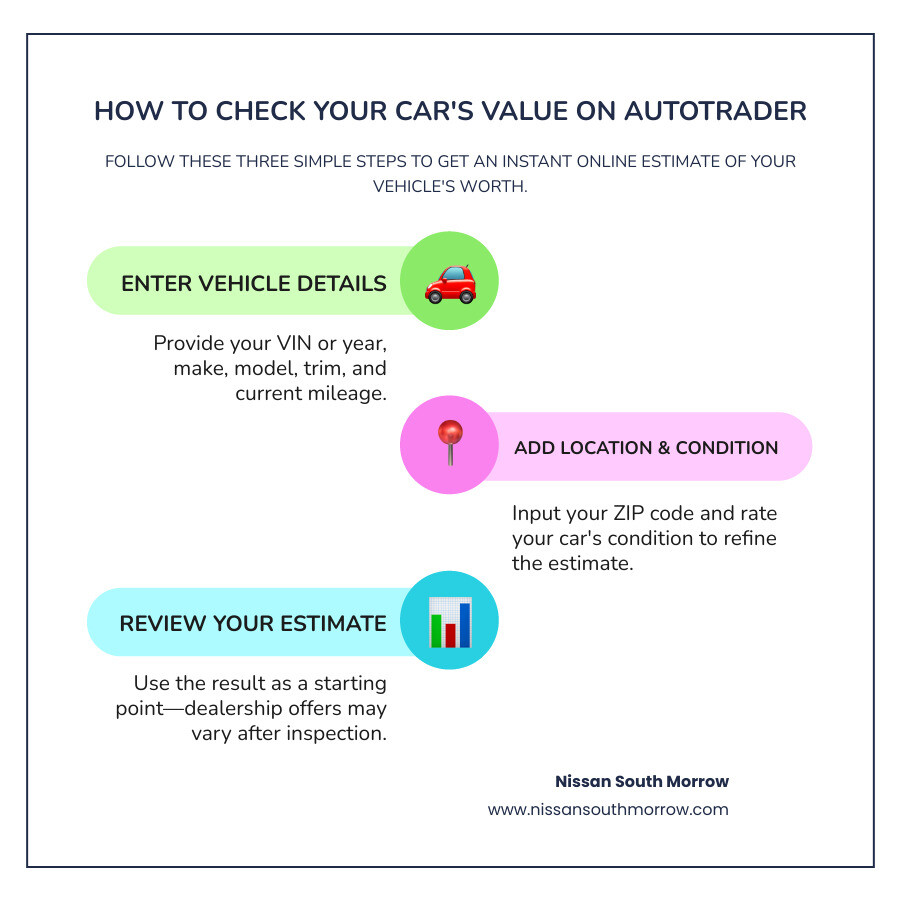
If you are searching auto trader how much is my car worth, start by checking what your vehicle is worth online. Open an appraisal tool and enter your vehicle details. Have your VIN or vehicle year, make, model, and trim ready, along with the current mileage. Add your ZIP code and condition when prompted. Use the result as a starting point, not a guaranteed offer: a dealership may give you a different figure after inspecting the car in person. When asking an auto trader how much is my car worth, the process begins with verified vehicle details to establish a practical market baseline before deciding whether to move forward. A data-backed estimate gives you a realistic range, while a physical appraisal confirms the final figure.
Vaughn Smith is marketing director for Smith Automotive Group, which includes Nissan South Morrow. Drawing on dealership and analytics experience, he recommends treating an online valuation as a starting point: confirm the exact trim, mileage, condition, and local market before relying on a trade-in figure.
Auto Trader How Much Is My Car Worth? Vehicle Valuation Guide
A vehicle valuation is an objective, data-backed estimate of what your car is worth in today's open market. Rather than relying on guesswork or emotional attachment, modern valuation tools analyze real-time sales transactions, regional wholesale data, and active listings to calculate current market values. For readers searching “auto trader how much is my car worth,” the goal is to understand how those details shape a realistic trade-in range.
Automotive pricing algorithms continuously process thousands of data points to account for market depreciation, vehicle age, odometer readings, and changing consumer tastes. Learning how to estimate your car's market value helps you understand the economic baseline of your vehicle so you can make confident financial choices when planning your next vehicle change.
Why Accurate Valuations Matter for Buyers and Sellers
Knowing your vehicle's actual worth gives you immediate leverage and clarity. When selling or trading in a vehicle, an accurate valuation prevents you from leaving money on the table or setting an unrealistic price that causes buyers to look elsewhere.
For everyday drivers balancing family budgets in south Atlanta, checking your vehicle's valuation allows you to calculate your equity position accurately. By comparing your current market value against your remaining auto loan balance, you can establish whether you have positive equity to apply toward a down payment, or if you need to adjust your financing timeline.
How Market Data Powers the Appraisal Process
Online valuation platforms rely on extensive data integration rather than arbitrary estimations. Major platforms incorporate pricing figures gathered from thousands of retail dealership websites, live online adverts, regional auto auctions, and commercial fleet lease turn-ins.
These platforms combine historical wholesale values with live supply-and-demand indicators. If a fuel-efficient commuter sedan or a family crossover with third-row seating sees high local demand, the valuation algorithms update to reflect that increased market desirability.
How to Get an Instant Price Check Step by Step
Generating an online vehicle valuation takes only a few minutes when you have your core documents ready.
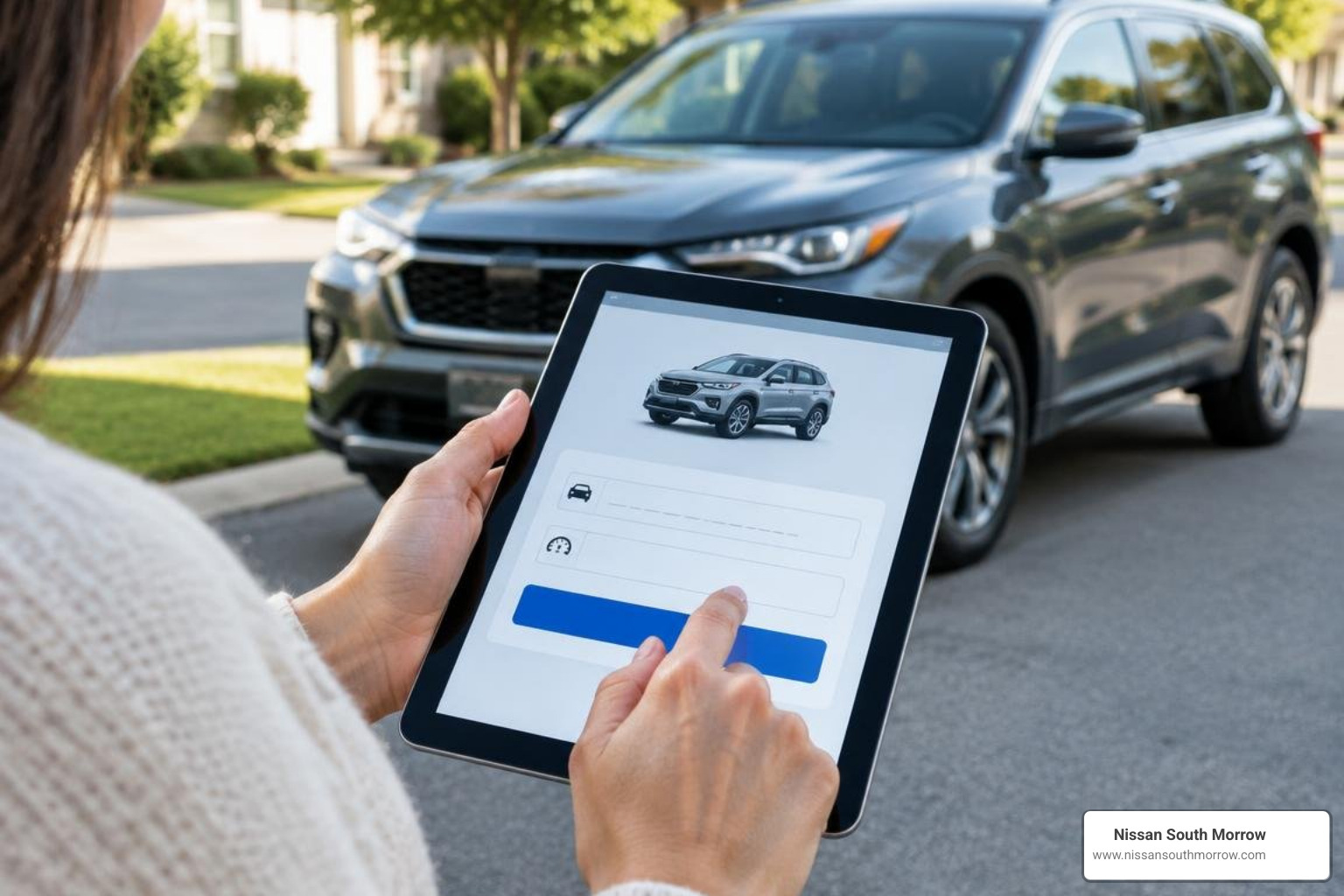
- Locate Your Vehicle Identification: Find your Vehicle Identification Number (VIN) on your vehicle registration card, insurance paperwork, or driver's side door jamb. For vehicles built for sale in the United States since 1981, NHTSA explains that the VIN is a standardized 17-character identifier. You can also begin by entering your license plate number and state. Use the NHTSA VIN decoder to confirm that the VIN format is valid.
- Confirm Year, Make, Model, and Trim: Make sure the system matches your exact vehicle specification. The difference between an entry-level trim and a premium edition equipped with leather seating, advanced navigation, or an upgraded drivetrain significantly impacts the final calculation.
- Enter Your Current Odometer Reading: Record the exact mileage from your instrument cluster rather than estimating.
- Input Your Local ZIP Code: Enter your residential postal code to ensure the platform applies regional demand adjustments for your specific market area.
- Select an Honest Condition Grade: Evaluate wear, mechanical health, and cosmetic imperfections objectively.
- Review the Market Valuation Breakdown: Examine the generated valuation categories to understand your expected trade-in, private transaction, and retail valuation levels.
Required Vehicle Details for an Online Price Check
Accuracy at the input stage directly determines the reliability of your result. Gather the following items before running your calculation:
- Exact Mileage: Mileage is one of the strongest variables in vehicle depreciation curves.
- Factory Options and Packages: Note all installed options such as premium audio, power moonroofs, all-wheel drive, or driver-assist technology suites.
- Vehicle History Details: Be ready to account for previous minor accidents, paint repairs, or title branding notes.
- Service Documentation Records: Proof of timely oil changes, brake services, and scheduled mileage maintenance intervals helps support top-tier condition selections.
Interpreting Trade-In, Dealership Purchase, and Dealer Retail Figures
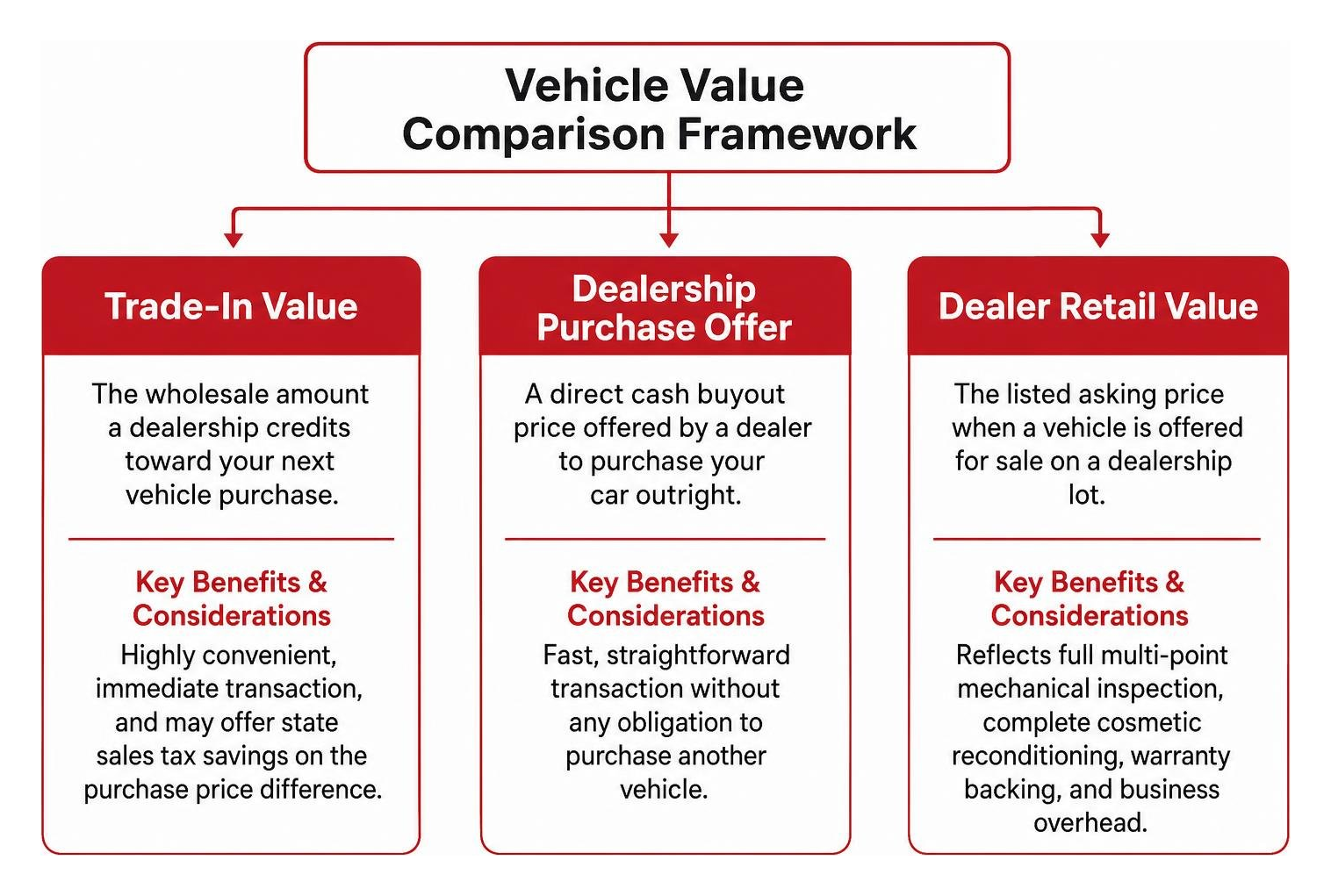
Online valuation reports typically present several distinct figures. Understanding what each number represents ensures you set realistic expectations for your transaction.
| Value Type | What It Represents | Key Benefits and Considerations |
|---|---|---|
| Trade-In Value | The wholesale amount a dealership credits toward your next vehicle purchase. | Highly convenient, immediate transaction, and may offer state sales tax savings on the purchase price difference. |
| Dealership Purchase Offer | A direct cash buyout price offered by a dealer to purchase your car outright. | Fast, straightforward transaction without any obligation to purchase another vehicle. |
| Dealer Retail Value | The listed asking price when a vehicle is offered for sale on a dealership lot. | Reflects full multi-point mechanical inspection, complete cosmetic reconditioning, warranty backing, and business overhead. |
Prepare for a More Accurate Online Estimate
An online valuation is only as useful as the information entered. Before starting, take a few minutes to look at the vehicle instead of relying on memory. Confirm the trim level, drivetrain, mileage, and major factory options. Small differences, such as all-wheel drive, a premium package, or a third row, can affect which comparable vehicles the tool uses. If the vehicle has aftermarket equipment, describe it honestly, but do not assume every upgrade increases its trade-in value. A dealership appraisal considers whether an item adds appeal for the next owner and whether it changes reconditioning needs.
It also helps to gather documents that support the vehicle’s history. Bring the title if it is available, the current registration, loan information if there is a payoff, and service records. Service paperwork does not automatically produce a higher offer, but it can help an appraiser understand how the vehicle has been cared for. If you are unsure which maintenance details matter, note the date and mileage of the most recent oil service, tire replacement, brake work, battery replacement, and any warranty repairs.
Be realistic when selecting the condition category. Normal signs of use, such as light scratches or minor interior wear, are common. Major warning lights, accident damage, missing keys, unusual noises, or a branded title should be disclosed before relying on an estimate. An accurate starting point makes the in-person review more productive and reduces surprises later.
For a convenient starting point, use Nissan South Morrow’s online trade-in valuation tool. You can also review the dealership’s KBB Instant Cash Offer page or CARFAX trade-in offer page to compare the information each process requests before scheduling an appraisal.
Key Factors That Impact Your Vehicle's True Value
Online valuation models use standardized formulas, but several key factors determine where your specific car lands within that valuation spectrum. This context helps answer the question, “auto trader how much is my car worth?” without treating a single online figure as a guaranteed offer.
Condition, Mileage, and Records
Odometer readings represent physical wear and tear across major mechanical components. Mileage affects value because it helps indicate the vehicle's use and expected wear relative to its age, condition, and model.
Cosmetic and mechanical condition also plays a major role. Most used vehicles fall into clean or average categories rather than flawless condition. Small parking lot dings, stone chips on the bumper, and worn tire tread require dealership reconditioning, which is factored into wholesale offers. Maintaining organized maintenance invoices is an effective way of maximizing your trade-in value, as documented service history proves the vehicle was properly cared for throughout ownership.
Disclaimer: This vehicle maintenance and appraisal guidance is provided for informational purposes only. Mechanical evaluations and repairs should only be completed by a certified Nissan technician. Please consult our service department and your vehicle owner's manual before conducting any maintenance or repairs.
Regional Demand and Local Market Adjustments
Vehicle values are not uniform nationwide. Geographic climate, local commuting patterns, and regional fuel prices create distinct pricing adjustments based on ZIP code. In Morrow and surrounding south Atlanta communities, dependable commuter sedans, versatile crossovers, and durable midsize trucks enjoy consistent local buyer demand. Valuation tools incorporate these regional factors to generate figures aligned with real market conditions in your area.
Compare Estimates Without Focusing on One Number
It is reasonable to collect more than one estimate, especially when you are deciding whether to trade, sell directly to a dealership, or keep the vehicle longer. The key is to compare like with like. Start by confirming that every estimate uses the same year, trim, mileage, ZIP code, condition, and accident-history details. A higher number may be based on a different trim, a broader retail price range, or assumptions that do not match the vehicle in your driveway.
Next, identify what the number represents. A trade-in estimate reflects the amount a dealership may apply toward another purchase after accounting for inspection, reconditioning, resale costs, and local demand. A direct purchase offer is for a dealership buying the vehicle without requiring another purchase. A retail figure is generally an asking-price reference for a vehicle prepared for sale to a future buyer, so it is not the same as an appraisal offer to the current owner.
Ask whether the estimate is a general range or an offer with stated conditions. A range can help set expectations, while an offer may have a time limit, mileage limit, or inspection requirement. Read those conditions before making plans around the figure. If the vehicle has an outstanding loan, request the current payoff amount from the lender. Comparing the payoff with the appraisal gives a clearer picture of available equity or the amount that still needs to be addressed.
A clear comparison also helps avoid treating an online result as a promise. Bring the estimate and supporting vehicle details to Nissan South Morrow so the appraisal team can review the same information in person. This approach keeps the conversation focused on the vehicle’s actual condition and the transaction option that best fits your next step.
Know When an In-Person Appraisal Is the Best Next Step
An in-person appraisal is especially useful when the vehicle has options that are easy to miss online, recent service work, cosmetic damage, or a payoff balance that affects a trade-in decision. It gives the dealership an opportunity to verify the vehicle rather than relying on a generic estimate. Schedule the review when you have time to ask how the condition, mileage, equipment, and local demand influenced the figure. A straightforward explanation can help you decide whether to trade now, sell directly, or wait while you continue to use the vehicle.
Selling Your Vehicle to a Dealership vs. Trading It In
When you decide to move on from your current car, you generally have two convenient dealership options: trading it in toward another vehicle or selling it directly to the dealership for an outright payout.
Trading in your car at a dealership streamlines your automotive transition into a single, cohesive visit. You drop off your old vehicle, apply its equity directly toward your replacement vehicle's down payment, and drive home. In many states, trading in also provides a valuable tax consideration, where sales tax is calculated only on the price difference between your trade-in allowance and the new vehicle's purchase price.
Alternatively, selling your vehicle directly to our dealership is an ideal route if you are downsizing, reducing household expenses, or no longer need an extra vehicle. You receive a firm purchase offer without having to manage online classified listings, coordinate test drives with unknown buyers, or navigate complex title transfers on your own.
Understanding an Instant Purchase Offer
An instant cash purchase offer provides an exact, guaranteed baseline for your vehicle for a stated timeframe or mileage limit. Unlike a broad valuation range, an instant offer represents a commitment to buy.
When you bring the vehicle to the dealership, our appraisal team conducts a quick visual and mechanical check to confirm that the vehicle's options, odometer reading, and physical condition match the details entered online. Once confirmed, the transaction can be finalized promptly.
What to Bring When You Are Ready to Trade or Sell
Having the right information ready can make the dealership visit simpler. Bring a valid photo ID, vehicle registration, all available keys and remotes, and any ownership documents you have. If the vehicle is financed, bring the lender’s name, account information, and the most recent payoff details. The dealership may need to verify the payoff directly with the lender, because the balance shown on a monthly statement can differ from the amount required to close the loan on a particular day.
If another person is listed on the title or loan, contact the dealership before arriving to learn what signatures or documents may be needed. Requirements can differ based on the ownership record and the lender, so confirming those details early can prevent an unnecessary second trip. If the title has been lost, a replacement may be needed before the transaction can be completed.
You can also prepare the vehicle for a fair review without attempting repairs yourself. Remove personal belongings, clear out the cargo area, and bring service records if they are available. A basic cleaning makes it easier to see the vehicle’s condition, but there is no need to hide ordinary wear or spend heavily on cosmetic work before getting an appraisal. The appraisal is intended to assess the vehicle as it is.
Before visiting, decide which outcome you want to explore. You may want to apply a trade-in allowance toward another vehicle, receive a direct purchase offer, or simply understand your current market position. Nissan South Morrow’s sell-us-your-car page explains the direct-sale option, while the value-your-trade page is a useful first step for an online estimate. Knowing your goal and having the key documents ready helps the appraisal team give you a clearer, more relevant answer.
Conclusion
Online price check tools remove the mystery from vehicle pricing, giving south Atlanta drivers a clear, data-driven starting point when preparing to sell or trade. Rather than relying on guesswork, using verified vehicle details allows you to budget effectively for your next daily commuter or family vehicle.
When you are ready to take the next step, our team at Nissan South Morrow is here to provide a clear, straightforward appraisal. You can easily value your trade online today and receive a transparent market offer backed by real-time automotive data.
Frequently Asked Questions About Car Valuations
How Often Should I Recheck My Car's Estimated Value?
If you are asking “auto trader how much is my car worth,” it is wise to recheck your vehicle's market value when you are preparing to trade or sell, after a meaningful mileage change, or when market conditions have shifted. Market conditions and seasonal demand shifts can alter used vehicle values over the course of a year.
Can I trade in a vehicle that is not fully paid off?
Yes, you can trade in a vehicle with an existing loan balance. During the appraisal, the dealership contacts your lender to obtain the exact payoff amount. If your vehicle's appraisal exceeds your loan payoff, that positive equity transfers directly toward your next vehicle's down payment. If your payoff exceeds the appraisal value (negative equity), the remaining difference can often be rolled into your new financing structure, subject to credit approval and lender guidelines.
How accurate are online valuation estimates compared to physical appraisals?
Online valuations provide an accurate mathematical benchmark based on regional market sales data. However, an algorithm cannot inspect paint depth, tire tread depth, interior odors, or subtle mechanical sounds. An in-person appraisal at the dealership finalizes the online estimate by visually verifying every detail of your vehicle.
What is the difference between trade-in value and private party value?
Trade-in value reflects what a dealership can offer after accounting for reconditioning, inspection, and resale costs. Private party value is typically higher because it represents a direct sale between individuals, but it also requires you to manage listings, buyer communications, test drives, and paperwork on your own.
Does my vehicle's color affect its value?
Color can influence resale value in some cases. Neutral colors such as white, black, silver, and gray often appeal to a broader range of buyers, while less common colors may take longer to sell. However, condition, mileage, and maintenance history usually have a much larger impact on valuation than color alone.
Should I fix minor cosmetic issues before getting an appraisal?
In most cases, minor cosmetic repairs cost more than the value they add at trade-in. Dealerships can often recondition small dings, scratches, and interior wear more cost-effectively than an individual owner. It is usually better to present the vehicle honestly and let the appraisal team account for reconditioning in their offer.